Best 3D Annotator Tools for LiDAR and Point Cloud Projects
Tatiana Zalikina,Director of Growth Marketing
How to teach a machine to see in 3D without losing your mind?
Best 3D Annotator Tools for LiDAR and Point Cloud Projects
Your model learns from what you tell it LiDAR means. If your annotation tool cuts corners, your model will too + faster and at scale. Reliable 3D LiDAR annotation services depend on consistent labels across frames.
What makes a good 3D annotation tool?
Let’s not pretend it’s all about UI. Of course, an eye-pleasing and easy-to-navigate interface is a huge plus; however, the most important criteria are:
Precision, handle dense point clouds
Temporal consistency, track objects across frames
Automation, reduce human effort and does not destroy quality
QA infrastructure, measure disagreement and fix it
Good 3D annotation services balance precision, automation, and quality control. In 3D, errors propagate into motion, planning, and decisions.
Top 3D / Multimodal Annotation Platforms
1. Encord / The Everything in One Place System
Encord stands out by treating annotation as a system; it:
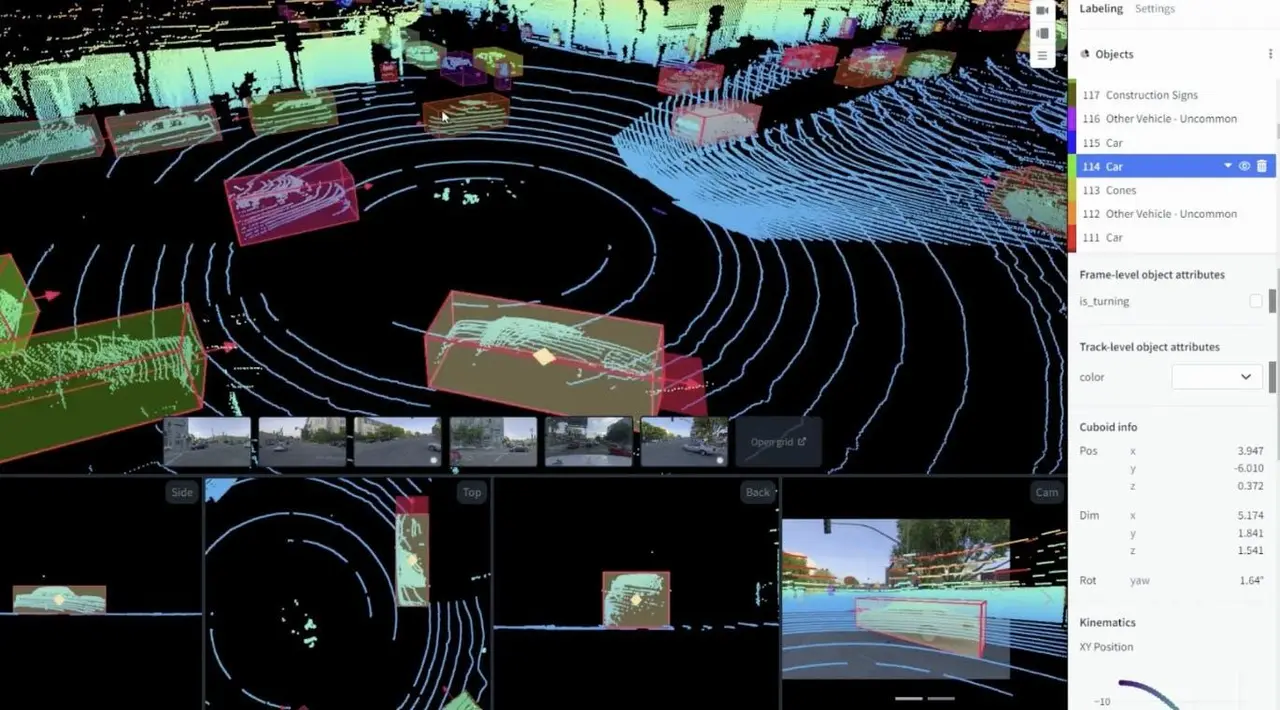
Supports cuboids, segmentation, and tracking across sequences
Handles LiDAR + camera + multimodal fusion
Includes QA layers like consensus scoring and annotator metrics
In short, Encord works when quality control is the bottleneck and helps measure whether labeling is consistent.
2. Abaka Forge Platform / Full-stack data + annotation system
An end-to-end data engine. Its 3D LiDAR annotation services support multimodal and point-cloud workflows.
Supports image, video, text, LiDAR, 3D/4D point cloud, RLHF
Covers collection → cleaning → annotation → training → evaluation in one system
AI-powered automation enables up to 50× faster annotation workflows
Built-in workflow + MLOps-style management for large-scale pipelines
In short, it's best for model performance along with labeling throughput
3. Segments.ai / Speed Without Chaos
Segments.ai is built for teams that value:
Fast cuboid creation and segmentation workflows
Designed for sequential LiDAR annotation
Strong support for robotics and autonomy pipelines
In short, it’s the tool you pick when speed competes with correctness and structure needed to avoid drift
4. Deepen AI / Precision is Everything
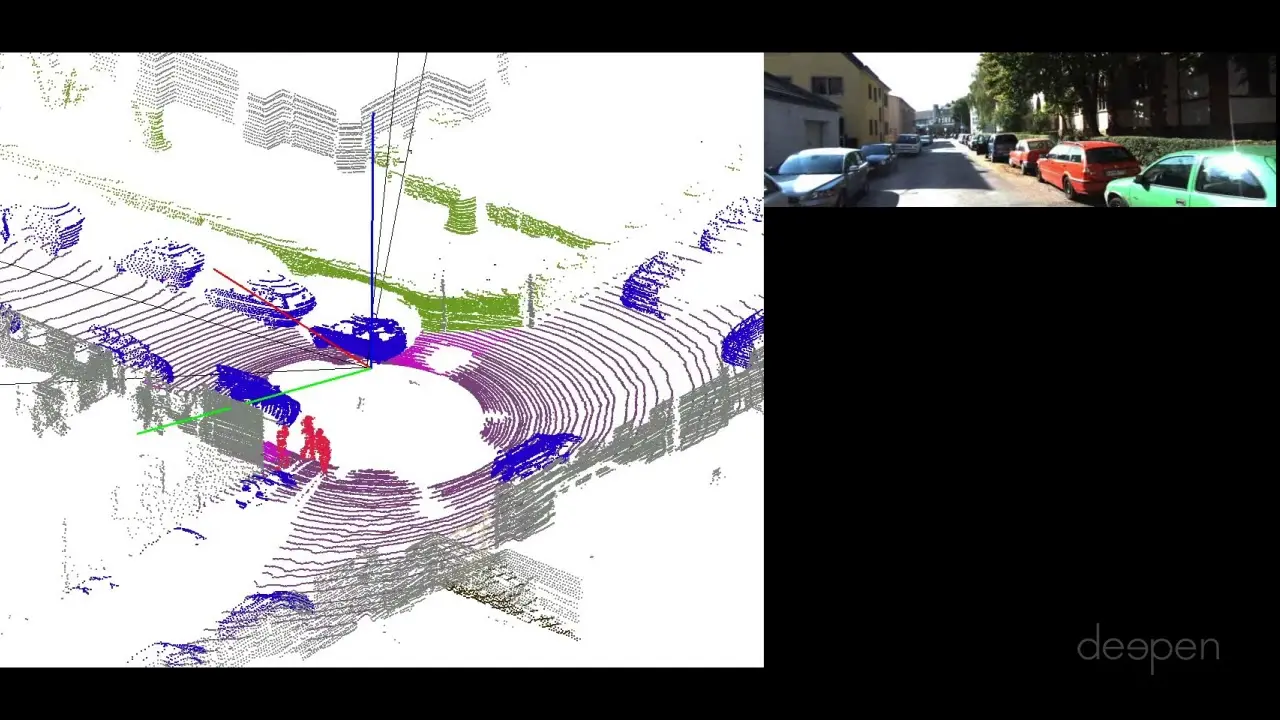
Deepen AI leans into engineering-grade accuracy.
Handles datasets with hundreds of millions of points
Supports segmentation, tracking, and sensor calibration
Built for automotive-grade perception systems
This is where annotation meets regulation.
In short, Deepen AI is used when it is unacceptable to be almost correct.
5. Dataloop / Annotation as a Pipeline
Dataloop = production workflow.
Supports cuboids, segmentation, polylines
Adds automation for filling temporal gaps
Includes QA dashboards and collaboration tools
In short, annotation is rarely done by one person, and Dataloop works when annotation turns into an organization. Teams should compare 3D annotation services against their data, workflow, and QA requirements.
Open-source reality check (CVAT, 3D-BAT, etc.)
Open-source tools exist and are useful and flexible.
But:
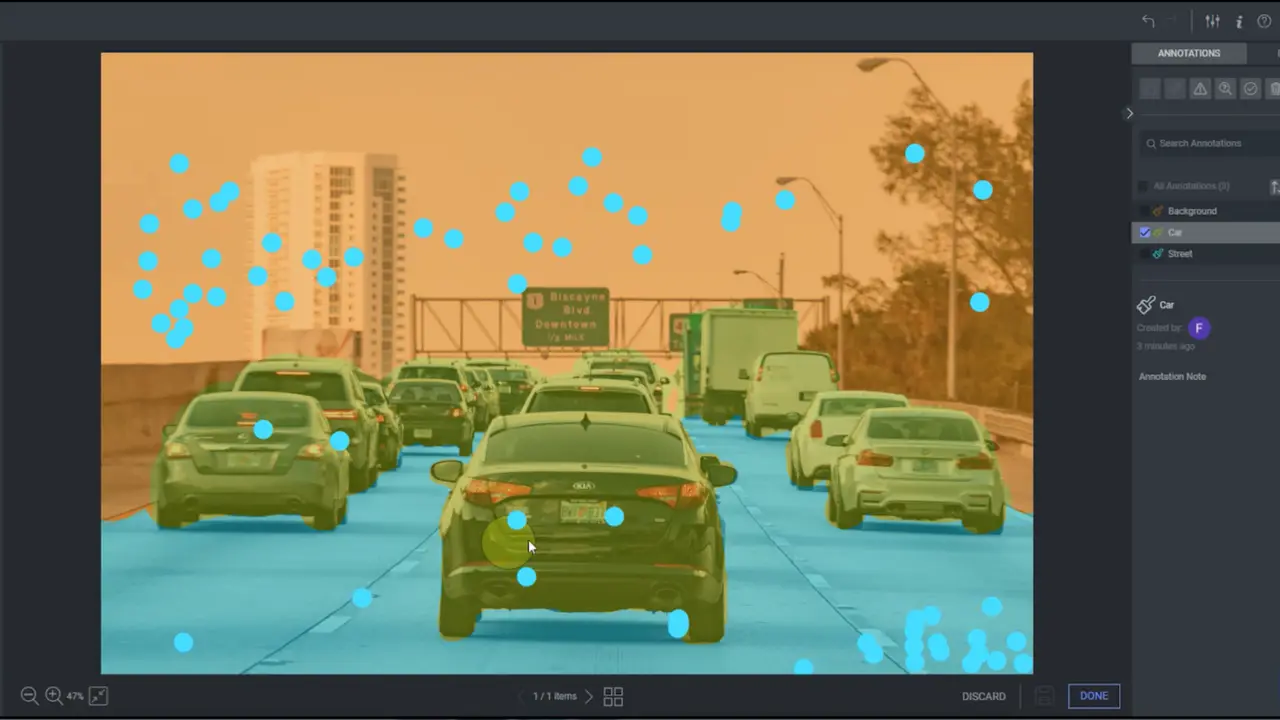
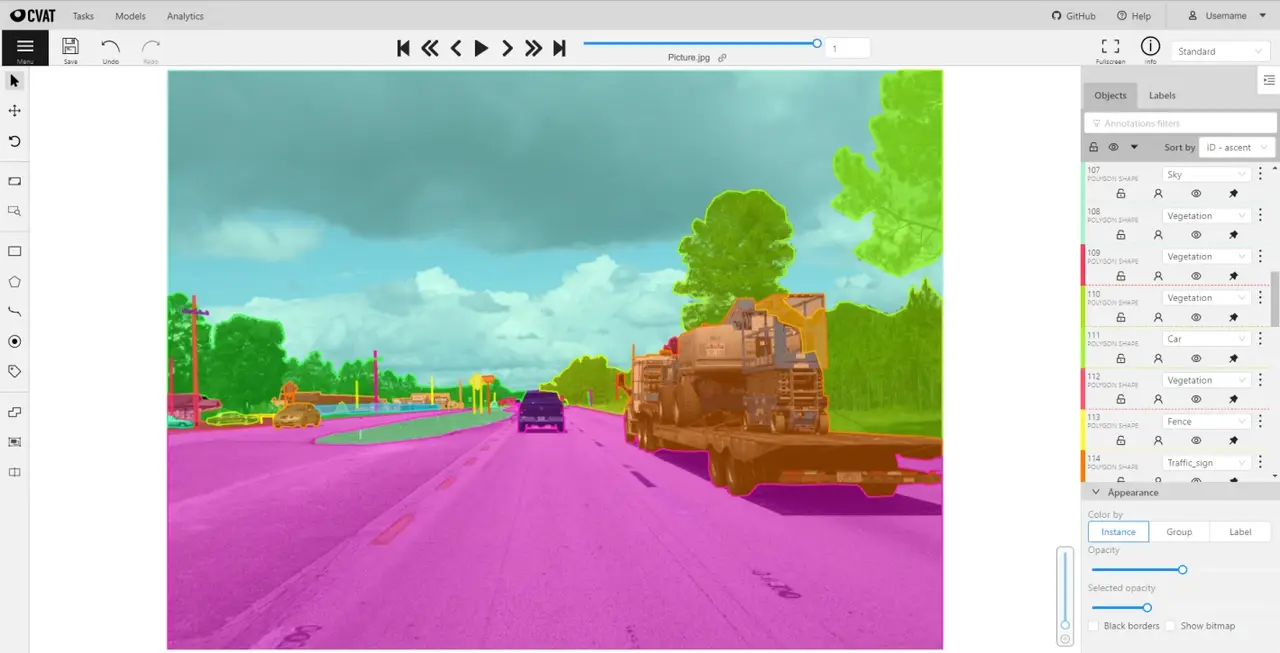
CVAT is exceptionally good but has limited 3D capabilities
Label Studio supports multiple formats but lacks deep LiDAR specialization
Tools like 3D-BAT provide strong features but require setup and maintenance
In short, open-source tools are great but rarely perfect enough for production-scale LiDAR pipelines. Production 3D LiDAR annotation services also require workflow management and measurable QA.
Top 3D Multimodal Annotation Platforms / Comparative Table
Let’s say it plainly. The hardest part is consistency over time and across people, because:
the same object looks different across frames
annotators interpret edge cases differently
models amplify every inconsistency
Way too many pipelines stumble here.
The best 3D LiDAR annotation services reduce inconsistency across annotators and sequences. Alongside picking a tool, you pick the behavior your model will learn as well. Choose wisely.
Q1 Why is LiDAR annotation critical for AI models? Because raw point clouds contain no semantic meaning, and annotation creates the ground truth models that the models learn from.
Q2 What tasks are common in 3D annotation? Bounding boxes, semantic segmentation, object tracking, and sensor fusion labeling across LiDAR and camera data.
Q3 What is the biggest challenge in LiDAR annotation? Maintaining consistency across annotators and frames. Small disagreements compound into large model errors.
Q4 Does automation replace human annotators? No. Automation speeds up labeling, but humans are still vital for edge cases and QA validation.
Q5 When should you move beyond open-source tools? When the dataset scale, quality requirements, or team size make manual QA and pipeline control critical.