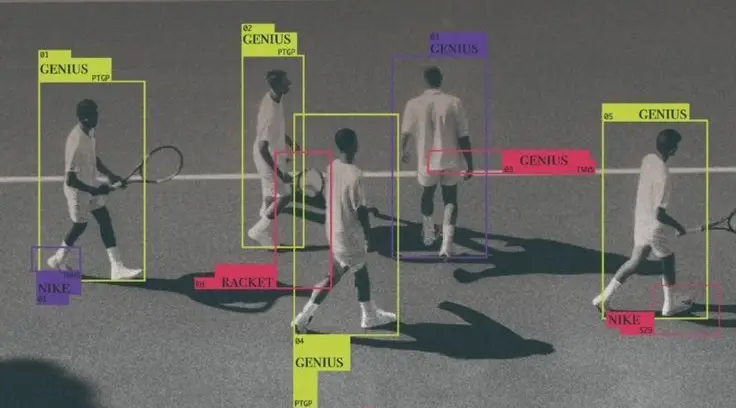
AI-powered data annotation technologies efficiency accuracy
Tatiana Zalikina,Director of Growth Marketing
Some tools label data; others interrogate it like detectives who already know the ending. And somewhere between those two extremes, the real story of “machine intelligence” quietly being told, stitched together by the software and ironed by people.
AI-Powered Annotation: Faster, Smarter, and More Accurate Data Labeling
Have you ever paused to imagine what happens before an AI “understands” anything at all? How the hidden ballet of pixels, labels, and human judgment builds the foundation of “intelligence”? Ladies and gentlemen, annotation. not glamorous, often invisible, but utterly essential.
Thanks to the newest AI-powered annotation technologies, this backstage work is becoming faster, sharper, and (dare I say) more poetic in its precision. Thus, it is time to explore AI-powered annotation, its efficiency, and accuracy. Let's get into it!
Why good annotation isn’t “nice to have” at all
Needless to mention, training any meaningful AI model, from computer vision to NLP, from robots to recommendation systems, all begin with annotated data. Without accurate labels, the model’s “learning” is like a painter working blindfolded. Annotation isn’t “nice to have”, but a crucial step instead.
In traditional manual annotation workflows, fatigue, ambiguity, and inconsistency can lead to error rates over 20%, especially when tasks are repetitive. (Annotera)
Poor annotation doesn’t just hurt a bit, but cripples model performance. For example, when pretrained models are fine-tuned on poorly annotated subsets, downstream tasks like localization suffer dramatically. (Habr)
So, yes, of course, you could blur the outlines, hope for the best. But that’s how you get shaky AI results.
What we believe and practice is: give the model clean, thoughtfully labeled data, and you give it a conscience.
AI-Powered Annotation: The Rise of the Smart Assistant for Data
Humans alone are powerful but slow. AI alone is fast but sometimes...let's say confused. That's why the magic lies in their collaboration, and recent research shows just how potent that combo can be:
A recent comprehensive survey of LLM-based “AI-agent annotation” systems found that such hybrid pipelines (machine-driven annotation + human-in-the-loop review) can reduce annotation time by up to 74%, while maintaining quality comparable to fully manual workflows. (MDPI)
In one real-world case with complex, multi-page disclosures (documents from global banks), using an AI-assisted tool accelerated annotation by up to 10X, and reduced total labor by hundreds of hours compared to a purely human baseline. (arXiv)
Another advanced method, called ARAIDA (Analogical Reasoning-Augmented Interactive Data Annotation), mixed classic machine learning with similarity-based (KNN) reasoning, resulting in 11.02% less human correction workload compared to standard interactive annotation. (arXiv)
In other words, annotation is no longer a manual drudgery; with the right tools, it becomes a streamlined collaboration between human insight and machine speed.
Annotation
But speed isn’t enough: annotation design matters
Rainbow-colored labels or sloppy guidelines won’t cut it. Not when you want AI that’s precise, fair, and robust.
A 2023 study showed that how you design your “annotation instrument”: the instructions, the schema, the interface, changes everything. Datasets collected under different conditions led to significantly different model performance. In tasks like hate-speech detection, models trained on annotations from one design performed differently than on another. (arXiv)
Another recent experiment with 307 annotators found that when given clear rules (vs vague standards), annotators achieved about 14% higher accuracy. And when combined with monetary incentives, the winning group reached 87.5% accuracy. (arXiv)
The lesson: annotation isn’t a checkbox you tick lightly but a craftsmanship instead. The clarity of your rules, the ergonomics of your tool (hyper link to another article from us), and the fairness of your feedback loop, they shape the very soul of the dataset.
Not to brag, but at Abaka AI, we obsess over these details. We don’t just trace boxes, but we build understanding.
What this all means - and why you should care
AI-powered annotation isn’t a marginal upgrade; it’s a paradigm shift. You get 3–10× faster throughput, ~85–95% annotation accuracy, and 50–80% cost reduction compared to naive manual pipelines. (MDPI)
But speed is worthless without structure. Annotation quality depends not just on the tool, but on the thought behind it. Ambiguous guidelines = shaky models. Clarity = trust.
And finally, when annotation is done right (with human + AI collaboration, good design, QA), you get AI that’s not only fast and cheap, but intelligent, reliable, and fair. That’s the foundation on which real AI products (robots, smart assistants, medical imaging, self-driving systems) stand.
How Abaka AI builds data with soul (and speed)
Here’s how we at Abaka turn the chaotic mess of raw data into a foundation for sharp, reliable AI without fluff and shortcuts.
Hybrid annotation pipelines: We use AI-agent assistance for bulk labeling, then human-in-the-loop review (HITL) to correct and validate, balancing speed and accuracy.
Thoughtful annotation design: Every project starts with clear guidelines, precise ontologies, and annotation schemas tailored to the domain. Because we know: rules matter!
Active quality control: We embed QA checkpoints, cross-validation, and statistical monitoring to catch outliers, bias, and drift before they creep into your model.
Scalability with reliability: Thanks to these practices, we scale to millions of annotations without sacrificing consistency!
When you partner with us, you get data that thinks.
Okay, so what do you have to do?
Good annotation takes raw sensory chaos, and draws grain-thin threads of meaning through it. It turns noise into pattern, uncertainty into clarity, pixels into purpose.
If you want to build AI that doesn’t “work” but understands, adapts, behaves with integrity — then start here: with human-grounded data, curated with love and precision.
Explore how Abaka AI’s hybrid annotation pipelines can scale your dataset with quality and speed.
Read more about best practices in annotation instrument design and quality control.
Get a free consultation — let’s map your data, frame your ontology, and build a dataset that feels human.
Ready when you are 😉
What's your data bottleneck this quarter?
Missing data
We collect it.
Messy data
We label it.
No time
We have itOff-The-Shelf.
Pick the closest fit, we'll take the call from there.