What Makes a Production-Ready Video Dataset for AI?
Yuna Huang,Marketing Curator
While public datasets like UCF101 and Kinetics-400 accelerate academic research, they pose critical risks to commercial AI deployment due to restrictive non-commercial licensing and technical flaws like "temporal inconsistency". Achieving production-ready robustness requires shifting from static file downloads to a rigorous data pipeline that enforces legal clearance, diverse scenario coverage, and automated verification checkpoints to detect and repair data violations before training.
What Makes a Production-Ready Video Dataset for AI?
The explosion of generative video models like Sora and Runway and advanced computer vision agents has created a massive demand for video training data. However, there is a "dirty secret" in the industry: models that perform brilliantly on academic benchmarks often fail catastrophically in the real world. The bottleneck is rarely the model architecture, it is the data infrastructure.
Real-world robustness doesn't come from more data; it comes from production-ready data. But what exactly defines that standard?
Why do most public video datasets fail when deployed in production?
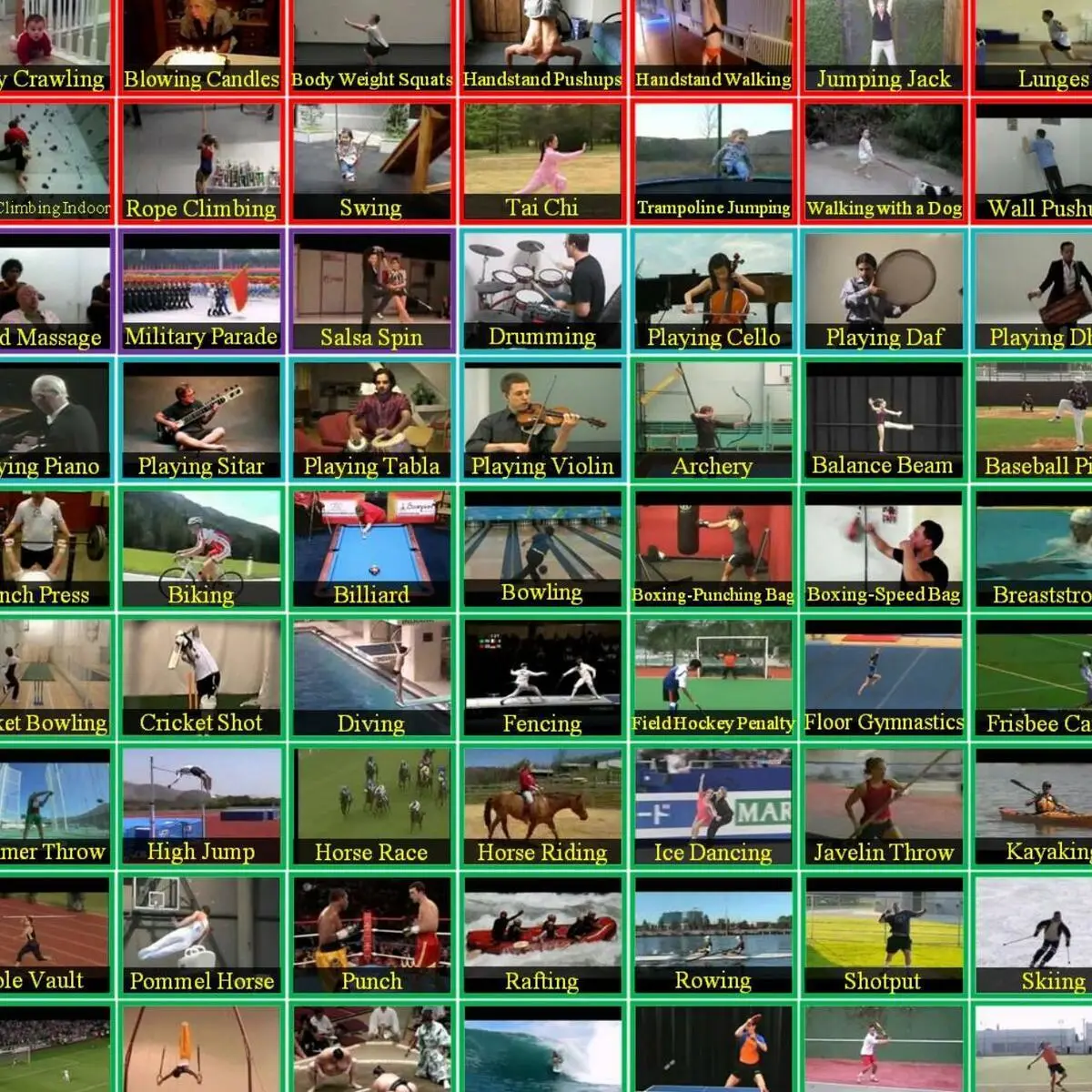
The primary reason public datasets fail in commercial deployment is that they were never designed for business use. Popular datasets like UCF101 (human actions) and Kinetics-400 (YouTube actions) are widely used for training AI in academia, but their commercial viability is fraught with legal and technical risks.
UCF101Kinetics-400
The Licensing Trap: Many "open" datasets sourced from YouTube, such as Kinetics-400, require users to adhere to YouTube's terms and the creators' original licenses, making broad commercial use difficult. Even datasets that seem open, like AVA, are often released under research-friendly licenses like CC BY-NC (NonCommercial), which explicitly restricts business use.
Unclear Rights: Datasets like UCF101 usually focus on realistic user-uploaded content, meaning direct commercial applications often require checking source licenses or contacting creators for explicit permission.
Distribution Shift: Academic datasets often focus on specific categories that may not represent the messy, uncurated reality of a production environment.
What distinguishes a 'Research Dataset' from a 'Production Dataset'?
The distinction lies in the intended lifecycle and legal safety of the data.
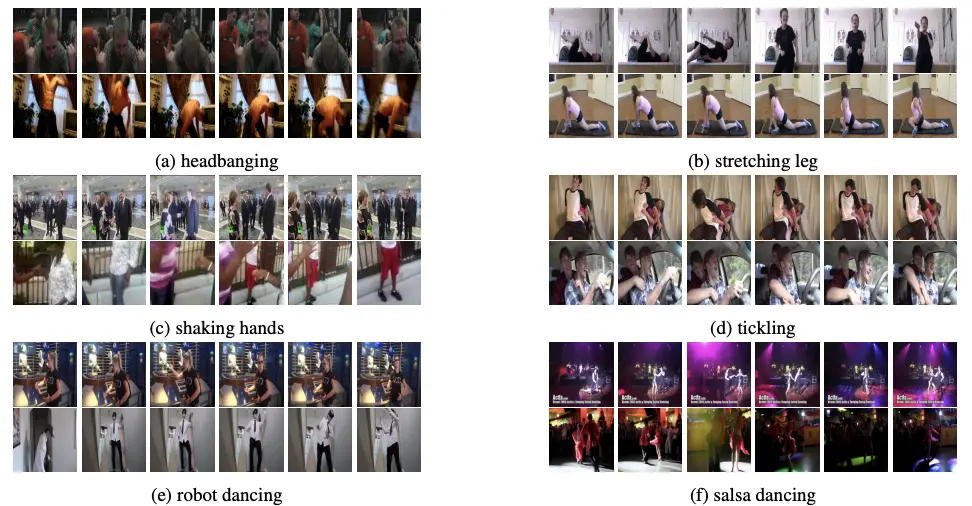
A Research Dataset is often a static snapshot designed for benchmarking. For example, HMDB51 is heavily research-focused and sourced from movies and web videos, where commercial use is generally restricted. The goal here is to publish papers, not to ship products.
A Production Dataset, by contrast, is a living infrastructure. It prioritizes:
Legal Clearance: Unlike YouTube-sourced data where many videos are under the "Standard YouTube License" (non-commercial), production data requires clear ownership or model releases.
Reliability: It moves beyond "widely used in academia" to being "free for business" and technically robust.
5 key requirements of a production-ready video dataset
To move from a research prototype to a production product, your video data pipeline must meet five specific criteria.
Legal Compliance & Licensing
As noted, datasets like Kinetics-400 inherit complex licensing from their platforms. A production dataset must eliminate this ambiguity. You cannot build a product on data where the license is "unclear" or requires individual checks with thousands of creators.
Temporal Consistency Monitoring
In the video AI, "jittery" labels ruin model performance. A production dataset requires a Temporal Consistency Model. This involves defining specific temporal constraints and measuring the execution state against them.
Consistency States: You need a system that defines "Temporal Consistency States" to measure whether the data flow is consistent or inconsistent based on defined criteria.
Fine-Grained Analysis: Rather than a simple "pass/fail," production pipelines should use a multiple-discrete-state model to identify levels of inconsistency (e.g., Weak Consistency vs. Strong Inconsistency) to determine if data needs to be discarded or repaired.
Data Coverage & Scenario Diversity
Production data must cover the "long tail" of scenarios. While UCF101 covers 101 categories, a production autonomous driving model might need thousands of specific edge cases (e.g., heavy rain, glare, obstructions).
Versioning & Updates
Production data is not static. It requires a lifecycle approach. Just as cloud workflows utilize "temporal checkpoint selection" to monitor execution, data pipelines need version checkpoints to track how data evolves over time.
Evaluation-Ready Structure
You cannot rely on the same data for training and testing. A rigorous "Golden Set" is required to verify performance.
How can engineering teams bridge the gap?
Building a dataset in-house often leads to a "failure of temporal violation handling," where teams lose time and budget trying to fix bad data later in the process.
Production-ready video datasets require a shift in mindset: from downloading a static zip file to building a pipeline that guarantees Temporal Consistency, Legal Compliance, and Verification.